
The Foundation Blocks on Which We Stand
To act as effective citizens and refuse to retreat into being subjects we have two powerful foundation blocks on which to stand. We have role models and actions to guide us with confidence.
The first of these foundation blocks is the extraordinary founding of America – and the second is our 250 year “no quit” trajectory of trying to realize the promise of the vision for all Americans.
Both our founding and the progress on our 250-year trajectory (even though very uneven) have been characterized by citizens showing an exceptional amount of courage, perseverance, resilience, and the willingness to take risks and sacrifice. AND having enough commitment to America to transcend differences to create a large diverse democracy.
Neither our founding nor our 250 year “no quit” trajectory were perfect, but they were extraordinary and can support us as we act to carry the American experiment in democracy forward.
Foundation Block Number One – Our Founding
The courage to establish something completely new – a new type of nation
What's Here
#1 The Core Elements of Our Founding
- Values and Principles Formed the Core
- Institutions Provided Structure
- Processes Complemented the Institutions
- Healthy “Dynamic Tensions” Have Been Respected and Managed
- Shared Personal Qualities Were Modelled
#2 Not Everyone Bought in – But Sufficient Solidarity Was Achieved
#3 It Wasn’t Perfect – But We Haven’t Quit
The founding of America was a remarkable process – a new model of governance for the world and showcasing the personal qualities required to establish such a model. It was a model of citizens taking responsibility for themselves and their community – the freedom as well as the responsibility of a citizen in a democracy.
It was a new idea in the world –that people could govern themselves – not because of birth or power – but because the people agreed to it and fought for it.
#1 The Core Elements of Our Founding
America’s greatness was based on a set of core values, a balance of individual liberty and public responsibility, a balanced tri-partite governmental structure, critical processes like free elections, a system based on laws and the belief that no one is above the law and everyone has equal rights under the laws. It was based on the belief that freedom of speech, religion, and beliefs must be protected – and it was based on a set of key institutions from courts to a free press.
That combination was designed to provide the benefits of an effective government while protecting individual liberty and the common well-being – as well as preventing the usurpation of power by an individual or group – or the violation of the rule of law by rulers for their own benefit.
It was also designed to create enough common ground to attract and retain a critical mass of Americans to wage the war necessary to be free. Creating that common ground was not easy as America contained a surprising number of powerful diverse elements.
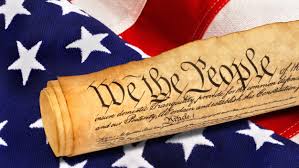
There were a lot of factors that had to come together to create the foundation for the American experiment in democracy – our foundation. We can draw strength from them, but we also need to protect them and ensure that they live in America today
Values and Principles Formed the Core
Values and principles form the heart of our founding, for example:
- Belief in democracy – that power comes from the people – not from a monarch or divine right - consent of the governed
- Liberty and Individual Rights – inherent rights and freedoms - freedom to think, speak, associate, worship, and choose actions
- Equality – equal access and protection under the law – equal opportunity to participate in political, economic, and social life
- Rule of Law – law applies equally to everyone, no one is above the law – justice is impartial and fair
- Balance of individual freedom and civic responsibility
- Free and fair elections
- Freedom of religion (and separation from government)
- Separation and balance of powers
- Tolerance/Pluralism – respect for differing opinions, values, and ways of life
- Belief in America as a model of democracy
Institutions Provided Structure
Institutions and processes form the structure that supported our founding:
1. Written Constitution and Bill of Rights structure of government and rights of individuals
2. Congress/Legislative branch
3. Presidency/Executive branch
4. Independent judiciary/legal system
5. Free and independent press (from local to national)
6. Civil society organizations
7. Balanced system of Federal and State Governments – Federalism – local government with unity
8. Diverse religious communities
9. Families
Processes Complemented the Institutions
A surrising number of democratic processes had to be designed and implemented:
1. Free and fair elections
2. Peaceful transfer of power
3. Transparent structured legislation and decision-making
4. Judicial review
5. Accountability of public officials and agencies
6. Legal due process – civic and criminal
7. Governmental checks and balances
8. Public participation
9. Civic education and engagement
Healthy “Dynamic Tensions” Have Been Respected and Managed
A surprisingly important part of our founding, trajectory depended on the ability to respect and manage a set of what can be called “dynamic tensions.” These are issues where there is a pull in multiple directions, and it is a tension that will never be fully resolved.
1. Governance (large and active or small) – federal, State, and Local
2. Capitalism and government regulation
3. Majority rule and minority rights
4. Individual rights and community responsibility
5. Expansive government action and restricted government action
6. Political parties and elections
7. Acceptance/compliance and protest
8. The identity and interests of a range of diverse groups
Shared Personal Qualities Were Modelled
The founding of America was also a model of the personal and collective qualities required to break free of the dominant model of autocratic hereditary rule and found something completely new.
It was a model for the world of the qualities required to literally put a life on the line and endure tremendous hardships, to establish a way of living that had no comforting history or future certainty on which to rely.
For example:
1. Courage and Willingness to Risk
2. Deep Conviction/Commitment
3. Willingness to Sacrifice
4. Perseverance and Resilience
5. Strategic Thinking in Leadership
6. Adaptability and Ingenuity
7. Collective Action and Solidarity
8. Identity – Individual and National
9. The ability to respect and manage differences
Solidarity Was Achieved
A large number of colonists wanted to stay subjects of the hereditary authority of Great Britain. And there was also a lot of debate about what the new nation should look like. But there was enough common ground and enough consistent solidarity over years to successfully break free of authoritarian rule and establish the alternative that became the USA
Our founding depended on the ability to establish enough solidarity or unity to support the revolution over a number of years. There were a number of factors that had to be overcome – different economies, religions, political interests, social classes, loyalties, cultures, regional identities, large vs. small states, urban vs. rural, etc.
The required (and surprising) common ground came from a number of places, for example:
1. The shared grievances against the British government, particularly control issues and taxation
2. The Declaration of independence provided common ground regarding purpose and identity
3. The Continental Congress provided a structure for coming together with a common purpose and process
4. The Constitution balanced centers of power with checks and balances, protected religious freedom, protected individuals from the government
5. There were enough exceptional individuals who emerged as leaders
6. There were enough subjects who chose to be citizens to create and maintain a critical mass of revolutionaries – authors of the new nation

Foundation Block Number Two - Our “No Quit” Historical Trajectory
The persistence and resilience to “hold the course”
What's Here
#1 The Model for the World Has Been One of Courage and Perseverance
- Values and Principles Formed the Core
- Institutions Provided Structure
- Processes Complemented the Institutions
- Healthy “Dynamic Tensions” Have Been Respected and Managed
- Shared Personal Qualities Were Modelled
#2 America’s Greatness Does Not Come from Never Having Done Anything Wrong
#3 Our Strength is Our Willingness to Keep Saying “Yes” to Pursuing the Original Vision
- We Aren’t Done Yet and Won’t be for Some Time
Americans have never quit and have courageously rejected the lure of giving up and becoming dependent “subjects” for 250 years. Our path has not been perfect, but we have kept working at fully realizing our founding vision for everyone, which has given us the second foundation block of America’s greatness on which we can stand as we act as citizens now.
#1 The Model for the World Has Been One of Courage and Perseverance
The model provided to others around the world – from our founding to the present – has been to persevere and keep grinding to fully realize the founding dream in spite of setbacks, missteps, and disappointments. It has been to have the courage and will to keep facing our gaps and commit to “holding the course” in order to pursue the original vision.
It’s Been a Roller Coaster
Our path has had lots of ups and downs and has often been scary, but we have kept working at fully realizing our founding vision for everyone. We have progressed and succeeded. We have also regressed and faced failures. We have lived up to the original vision, and we have come up short at times.
Over the last 250 years, the United States has made major progress in realizing the promise of its founding—freedom, equality, and self-government—but that progress has been uneven and continually challenged by forces that have undermined it. The founding promise of America—liberty, equality, and democracy—has been a powerful ideal that has inspired both great progress and fierce resistance.
Real gains have been made through struggle, reform, and activism, often led by ordinary citizens pushing the nation to live up to its ideals. At the same time, entrenched interests, systemic inequalities, and anti-democratic forces have repeatedly slowed or reversed progress.
The last 250 years of the American experiment in democracy have been marked by a powerful tension between progress toward realizing democratic ideals and forces that have sought to undermine or reverse those gains.

#2 America’s Greatness Does Not Come from Never Having Done Anything Wrong
It comes from continuing to work at achieving the founding vision, being secure enough to acknowledge that we aren’t there yet, and that we have made mistakes on the path. Our history is full of indefensible discrimination, injustice, and violence. America’s greatness comes from being secure enough to acknowledge the gaps combined with the courage to work relentlessly to close them. We persevere and we refuse to quit, and we keep showing up. There is no quit.
#3 Our Strength is Our Willingness to Keep Saying “Yes” to Pursuing the Original Vision
We have not fully achieved the dream, but neither have we stopped pursuing it . We have not given up and handed over our responsibility (and our freedom) as citizens of a democracy to the false promises of a despot. Powerful democracies are destroyed from within when people lose heart. For the last 250 years a critical mass of Americans refused to give up in the face of difficulty, anxiety, frustration, and setbacks. They took the inevitable hits and kept going.
Our strength has been in continuing to celebrate what we have achieved and, at the same time, to fight to “right the wrongs” – not to cower in insecurity and deny or defend our gaps. The critical point is that we have shown the commitment and courage to acknowledge and confront the significant gaps. America is great because we are secure enough to say with confidence:
“Yes, we can do better – we will do better – we will always seek to do better.”
We Aren’t Done Yet and Won’t be for Some Time
Although we have had a mixed history of progress and backsliding, America has been working at realizing the founding principles and values ever since its beginning. It has been a relentless challenge to choose the right trajectory and to persevere despite a disappointing pace with lots of small and large ups and downs – progress and back-sliding, but no quitting.
Our challenge is to celebrate hard won progress and – at the same time – keep acknowledging where we have come up short in fully realizing America’s promise. And to learn from the experience and keep grinding to fully realize the vision. That is the second foundation block on which American Greatness stands.
